A Kung Fu Athlete Bot That Can Do It All Day :
Highly Dynamic, Balance-Challenging Martial Arts Motion Dataset and
Autonomous Fall-Resilient Tracking


Abstract

Currently, motion tracking technology for humanoid robots can effectively execute routine actions and high-dynamic behaviors. However, significant research gaps remain at the boundaries of hardware performance limits and motion algorithm robustness, awaiting further exploration. Martial arts, as a quintessential example of humanity continually pushing the boundaries of its physical capabilities, exhibit movements characterized by high intensity, extreme complexity, and rapid changes. Yet, specialized datasets tailored for such highly dynamic motion scenarios remain scarce. To address this gap, this paper constructs a high-dynamic martial arts motion dataset from video footage of professional martial artists, focusing on representative complex motion patterns involving frequent center-of-gravity shifts and rapid postural changes. It is important to note that even experienced professional athletes may make mistakes when executing highly dynamic movements. Similarly, robots are highly susceptible to losing balance or falling when encountering unknown external disturbances or execution errors. However, most existing research assumes that the motion execution process remains in a safe state at all times. There is a lack of a unified strategy that can model unsafe states during motion tracking and achieve timely, reliable autonomous recovery when falls or instability occur. This paper proposes a novel model training paradigm enabling robots not only to learn high-dynamic motion tracking under unsafe conditions and external disturbances but also to actively recover from unstable states. This approach expands robotic capabilities from “mere motion tracking” to “recovery-enabled motion execution,” advancing humanoid robots' application in real-world performance scenarios. It enables robots to transition beyond laboratory environments, freeing them from gantry support and human intervention to achieve more autonomous, robust high-dynamic motion performance.

Project Status: Active Development with Ready Ground Subset
Model training is currently under active development.
Ground subset: largely complete and ready for training.
Jump subset: still has minor imperfections due to video source limitations. Most samples have been carefully screened, though training performance may vary.
Please try out the dataset first 😺

Dataset Overview

The dataset originates from athletes’ daily martial arts training videos, totaling 197 video clips. Each clip may consist of multiple merged segments. We apply automatic temporal segmentation, resulting in 1,726 sub-clips, ensuring that most segments avoid abrupt transitions that could introduce excessive motion discontinuities.

All sub-clips are processed using GVHMR for motion capture, followed by GMR-based reorientation. After filtering and post-processing, the final dataset contains 848 motion samples, primarily reflecting routine training activities.

Category Distribution

Category Count Example Subcategories
Daily Training 715
Fist 53 Long Fist (33), Tai Chi Fist (14), Southern Fist (6)
Staff 30 Staff Technique (30)
Skills 28 Backflip (12), Lotus Swing (9)
Saber / Sword 15 / 7 Southern Saber (15), Tai Chi Sword (7)

Motion Statistics Comparison

Dataset FPS Joint Vel. Body Lin. Vel. Body Ang. Vel. Average Frames
LAFAN1 50.0 0.00142 0.00021 0.01147 10749.23
PHUMA 50.0 0.00120 0.00440 -0.00131 169.59
AMASS 30.0 0.00048 -0.00568 0.00903 370.65
KungFuAthlete (Ground) 50.0 -0.00199 0.01057 0.04034 577.68
KungFuAthlete (Jump) 50.0 0.02384 0.05297 0.18017 397.21

Ground vs. Jump Subsets

KungFuAthlete (Ground)

Contains non-jumping actions, emphasizing:

  • Continuous ground-based power generation
  • Rapid body rotations
  • Weapon manipulation and stance transitions

KungFuAthlete (Jump)

Includes high-dynamic aerial motions such as:

  • Somersaults
  • Cartwheels
  • Other acrobatic jumps

Key Observations

  • The Jump subset exhibits the highest joint velocity, body linear velocity, and angular velocity among all compared datasets.
  • The Ground subset still shows significantly higher dynamics than natural motion datasets (LAFAN1, AMASS).
  • Compared to PHUMA and AMASS, KungFuAthlete demonstrates stronger non-stationarity, larger motion amplitudes, and more challenging transient dynamics, even at comparable or higher frame rates.
🚀 More high-dynamic-range actions and open-source models coming soon ...
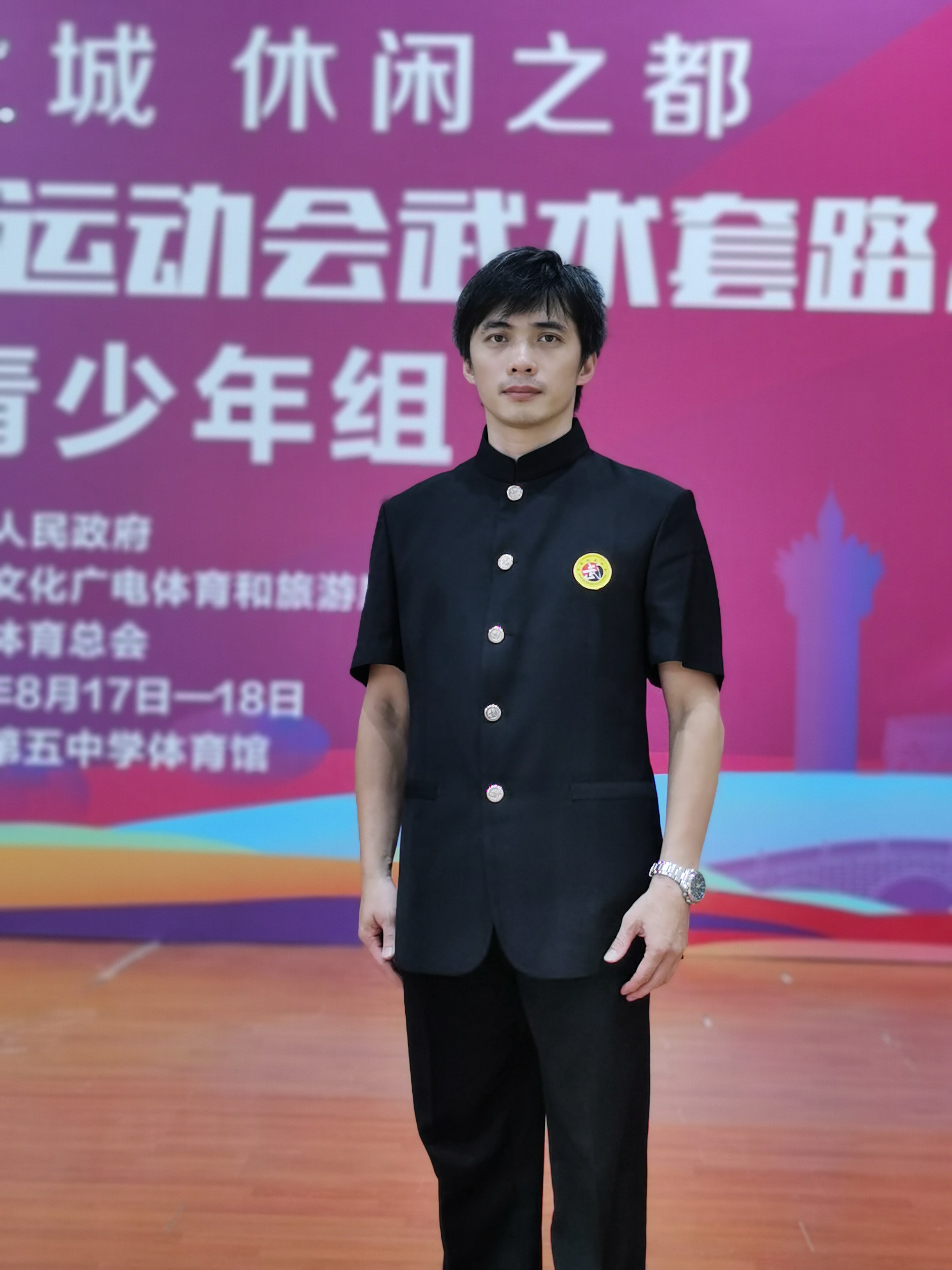
Xie Yuanhang

Acknowledgement

The video materials used in this project are primarily sourced from a series of publicly released martial arts training and competition demonstration videos by Xie Yuanhang.

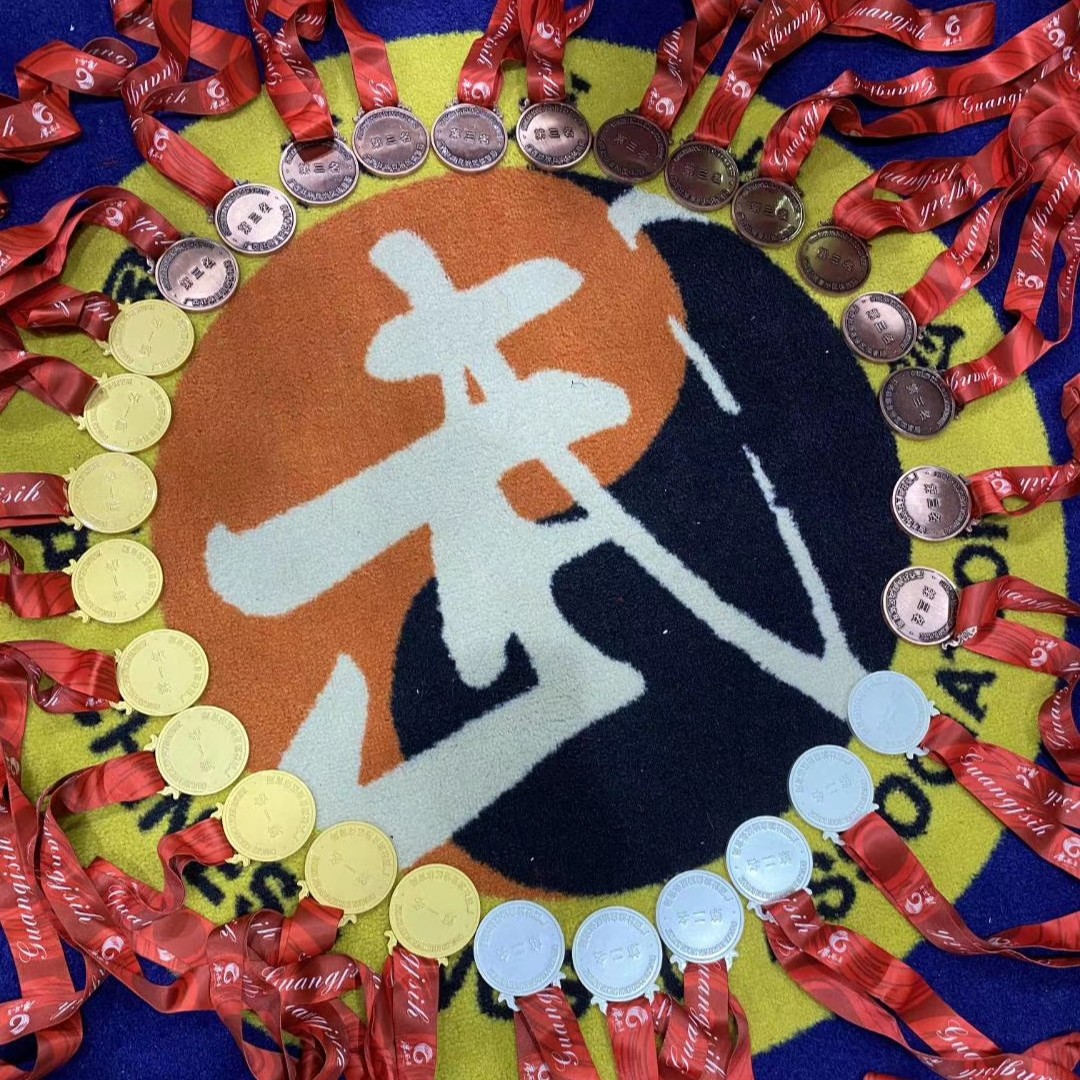
Xie Yuanhang is an athlete of the Guangxi Wushu Team, a National-Level Elite Athlete of China, and holds the rank of Chinese Wushu 6th Duan. He achieved third place in the Wushu Taolu event at the 10th National Games of the People’s Republic of China.

His demonstrations cover Changquan, Nanquan, weapon routines, and Taijiquan (including Taijijian), and are of high professional and instructional value.

We sincerely thank Xie Yuanhang for granting permission to use his publicly available videos for research and academic purposes only.


本项目所使用的视频素材主要来源于谢远航教练/运动员在其个人平台公开发布的武术训练与竞赛示范视频。 谢远航系广西武术队运动员,国家级运动健将,中国武术六段,曾获中华人民共和国第十届运动会 武术套路项目第三名。

在此特别感谢谢远航先生对本项目的授权与支持,允许基于其公开视频素材进行整理、处理与科研使用。

🔗 Bilibili Personal Homepage

If you find our dataset useful or use it in your research, please cite:
@article{lei2026kungfuathletebot,
  author  = {Zhongxiang Lei and Lulu Cao and Xuyang Wang and Tianyi Qian and Jinyan Liu and Xuesong Li},
  title   = {A Kung Fu Athlete Bot That Can Do It All Day: Highly Dynamic, Balance-Challenging Motion Dataset and Autonomous Fall-Resilient Tracking},
  year    = {2026},
  eprint  = {2602.13656},
  archivePrefix = {arXiv},
  primaryClass  = {cs.RO}
}